Many ultra-low temperature freezers reach such low temps by using a cascade refrigeration system, which the International Institute of Refrigeration describes as the most common design for ultra-low refrigeration. This post explains how a cascade system works, starting with how refrigeration works in general.
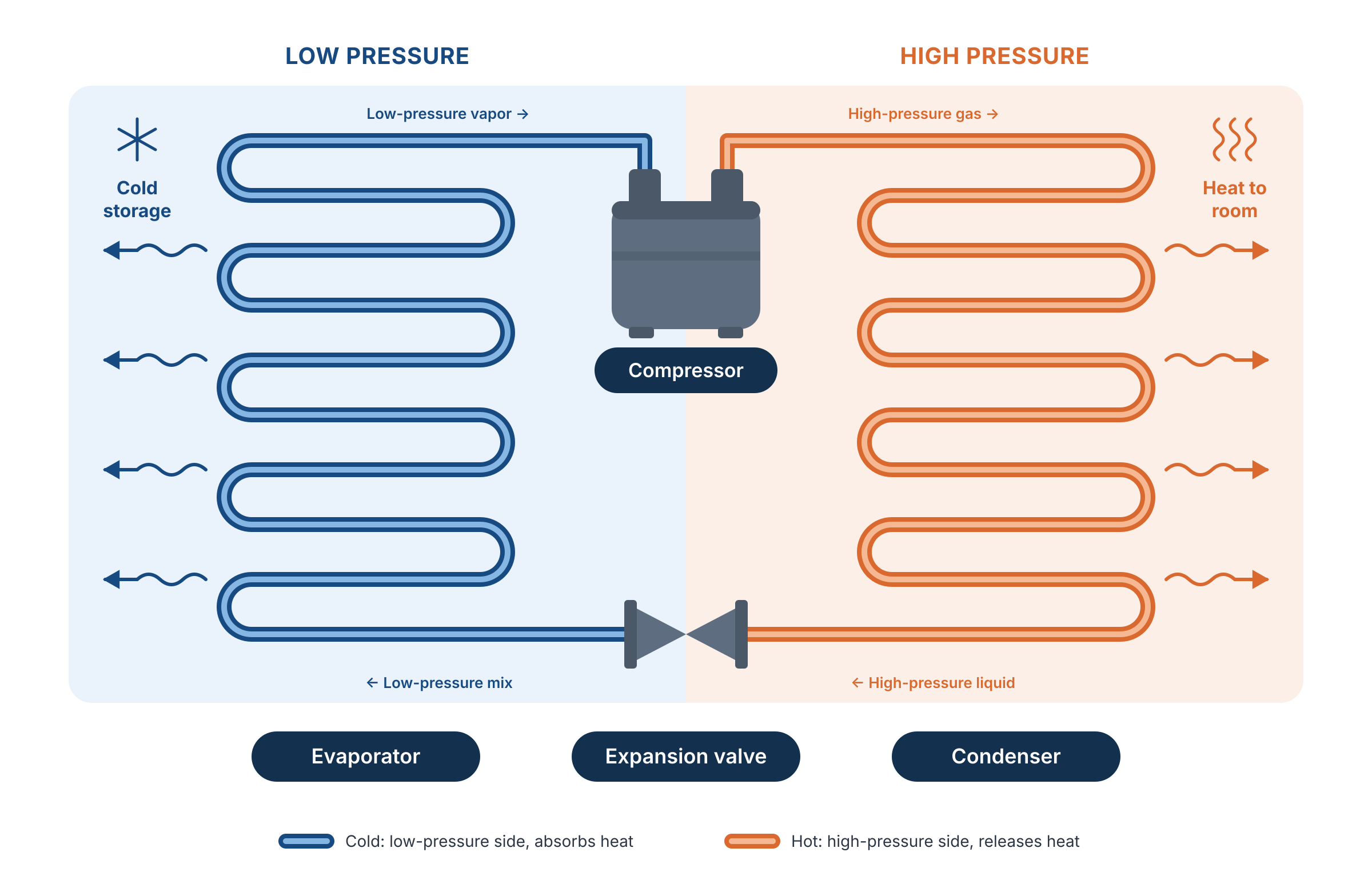
How Refrigeration Works
A refrigerator doesn't create cold, it moves heat from inside the cabinet to the space outside it.
It does this with a refrigerant, a fluid that circulates through a closed loop. This process can be broken down into four parts:
Expansion valve: High-pressure liquid refrigerant passes through a valve into a low-pressure area, which drops its temperature.
Evaporator: The cold refrigerant flows through coils inside the cabinet, absorbs heat, and evaporates into a gas.
Compressor: The gas is pressurized, which makes it hotter than the surrounding room.
Condenser: The hot refrigerant releases its heat into the room and condenses back into a liquid. The cycle then repeats.
A household refrigerator uses one loop like this.
Why Ultra-Low Temperatures Need More Than One Loop
At ultra-low temperatures, a single loop runs into two limits. A single stage can't economically reach the level of compression required, and refrigerants capable of reaching ultra-low temperatures can't condense at room temperature on their own.
How a Cascade System Works
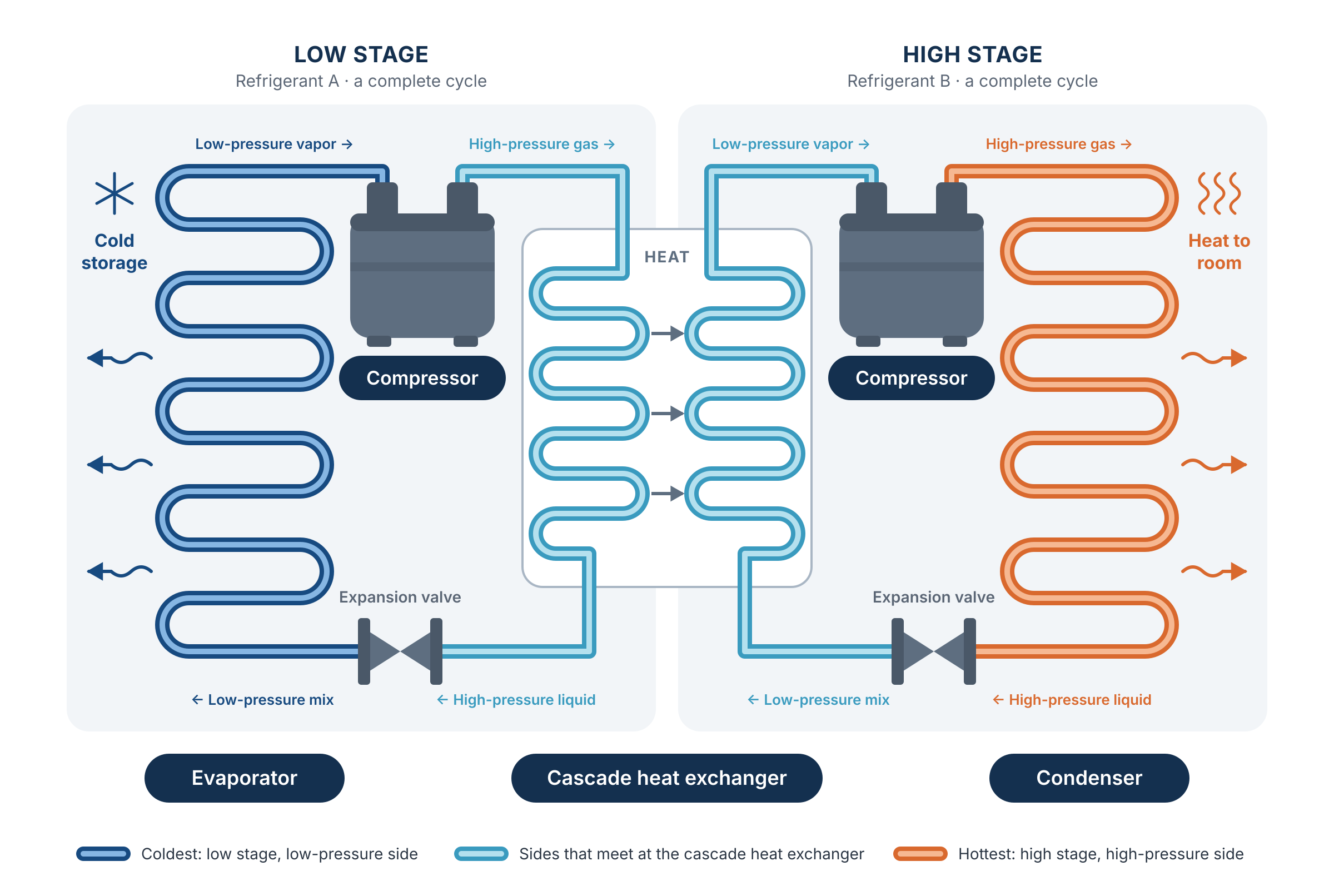
A cascade system uses two or more refrigeration cycles, each with a different refrigerant. Each cycle covers part of the total temperature drop, and its refrigerant is selected to work efficiently in that range.
In a two-stage system:
Low stage: Removes heat from the storage space through its evaporator.
High stage: Absorbs that heat from the low stage and releases it into the room through its condenser, which carries the entire heat output of the system.
The two stages meet at a heat exchanger, sometimes called the cascade condenser. It acts as the condenser for the low stage and the evaporator for the high stage.
It’s important to note that designs vary. Many systems keep each stage in its own sealed loop with its own compressor. Others, called auto-cascade systems, use a single compressor with a mix of refrigerants that separate as the system runs. Systems built for temperatures below -80°C may use three stages.
Why It Matters for Day-to-Day Operation
Department of Energy guidance on running ultra-low freezers points to several factors that affect how these systems perform:
Room temperature: Failures increase as room temperature rises, likely due to strain on the cascade compressors.
Airflow: Dust on filters and condenser coils blocks airflow and reduces the freezer's ability to release heat. Manufacturers specify clearances around the unit for ventilation.
Age and maintenance: Efficiency drops over time because of worn seals, refrigerant loss, and mechanical wear. Regular maintenance helps a freezer reach its set point consistently.
For facility planning, see What Does Your Facility Need to Support Ultra-Low Equipment? For warning signs to watch for, see Signs Your Commercial Freezer Needs Service Before It Fails.
Designs and requirements vary by manufacturer and model. Refer to your equipment's documentation and a qualified service technician for guidance on a specific system.